Iceland
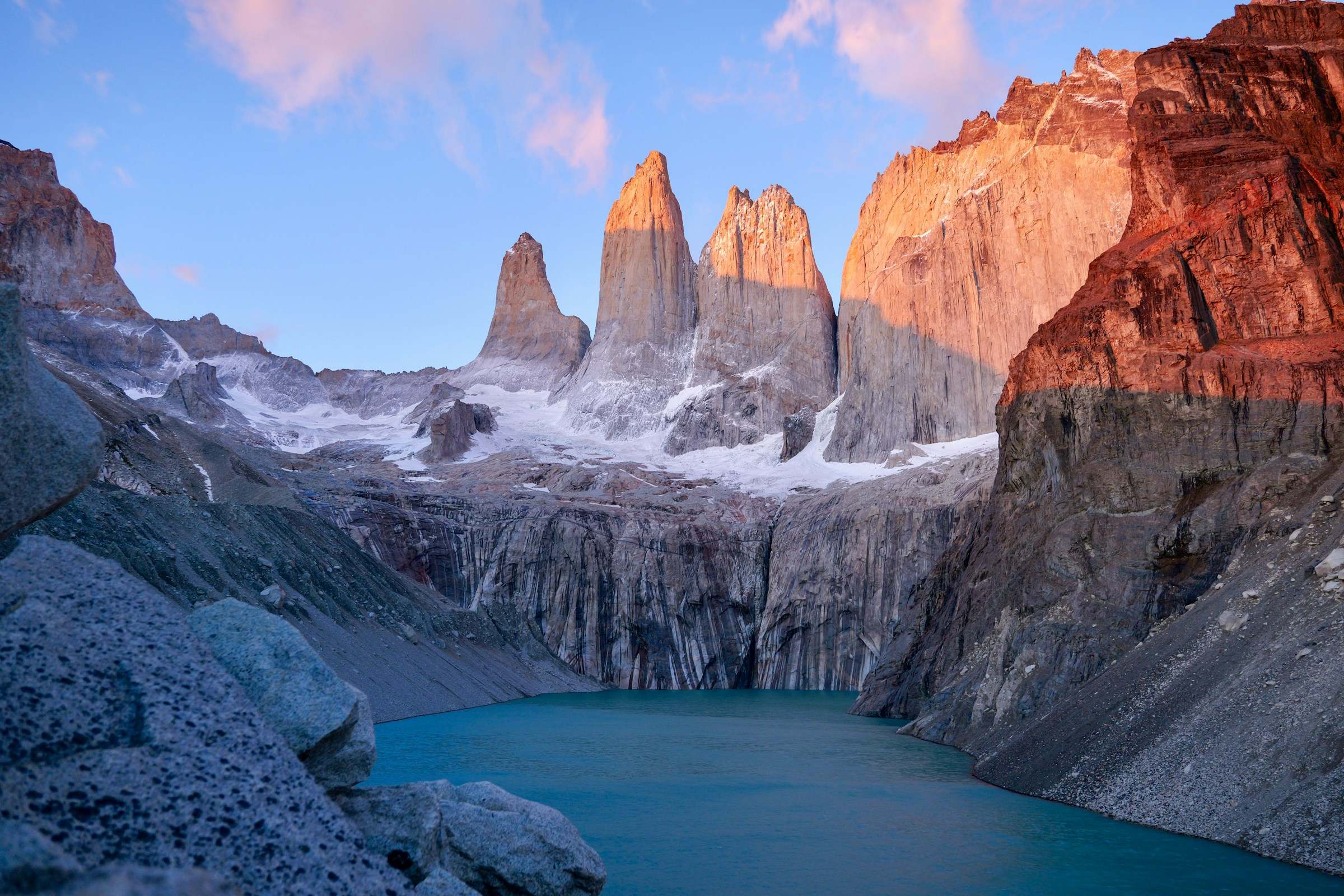
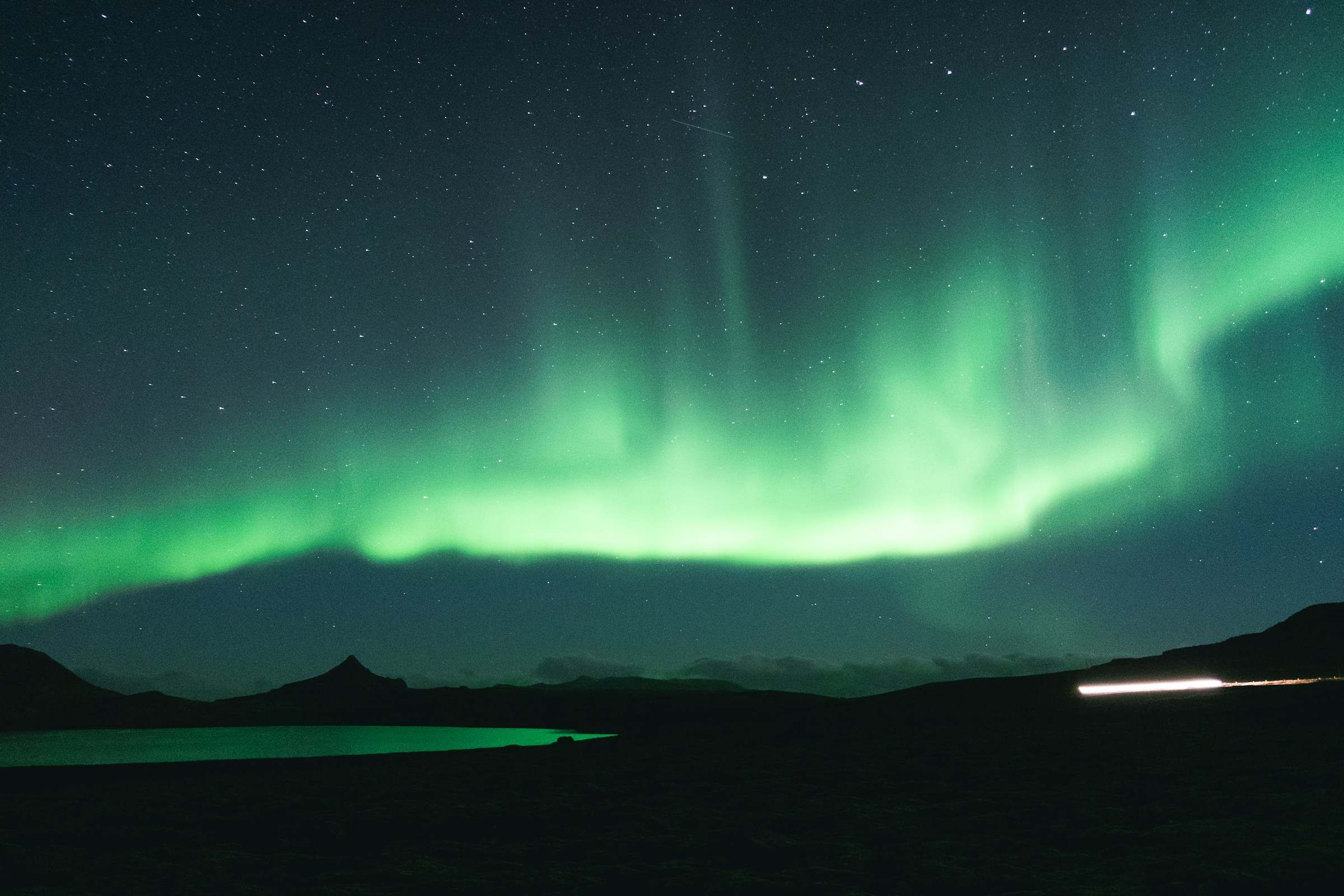
Aurora, and the midnight sun, 23:30. Iceland's best light comes when the rest of Europe is asleep: aurora from September to March, and a sun that skims the horizon all night in June.
in Iceland, now
This page keeps the hours in Iceland. It is the day page while the sun is up there, and it turns to night at sunset.
Photo: Lucas Marcomini, UnsplashPhoto: changhui lee, UnsplashPhoto: Jeromey Balderrama, Unsplash
A day in Iceland, from dawn to night
The best light in Europe starts near midnight.
A late, slow sunrise
In late winter the sun takes its time: an hour of pink on the peaks before it clears them. The plain is frozen and the road is empty. Down at the coast the black sand is still in mist, and the sea stacks come and go.
Among the ice
At Jökulsárlón the glacier lets go of its ice into a lagoon, and small boats thread between the pieces. Some are white, some blue, some striped black with old ash. Across the road they wash up on the black beach like glass.
Waterfalls, lit from the side
The south coast is one long cliff with waterfalls coming off it. Late in the day the sun gets in under the cloud and the grass turns russet. You will stop the car more often than you planned.
One lit window
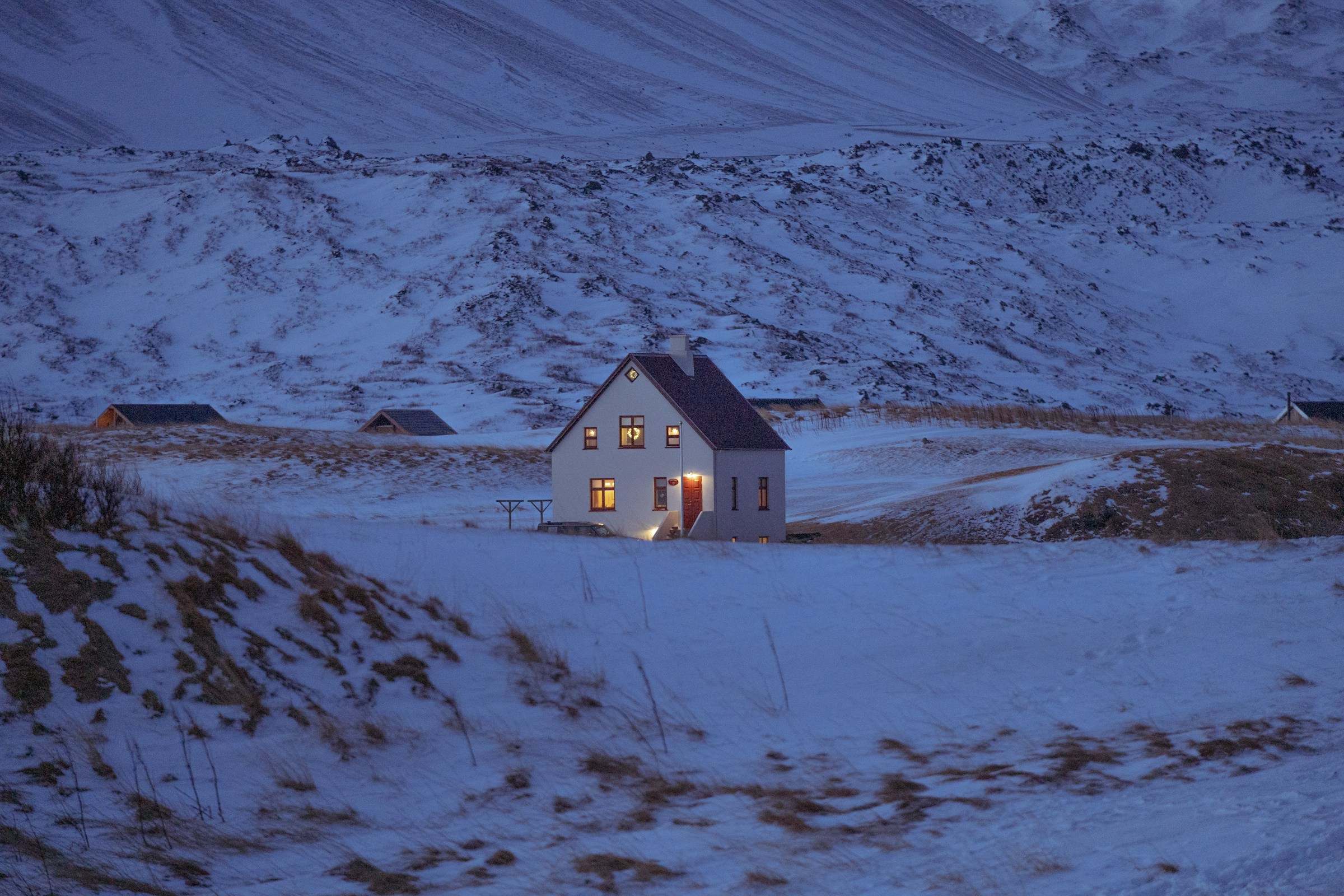
Blue hour lasts a long time this far north. A white farmhouse with its windows lit, and snow the colour of the sky. Supper is lamb soup. Then you wait.
Coat on over your pyjamas
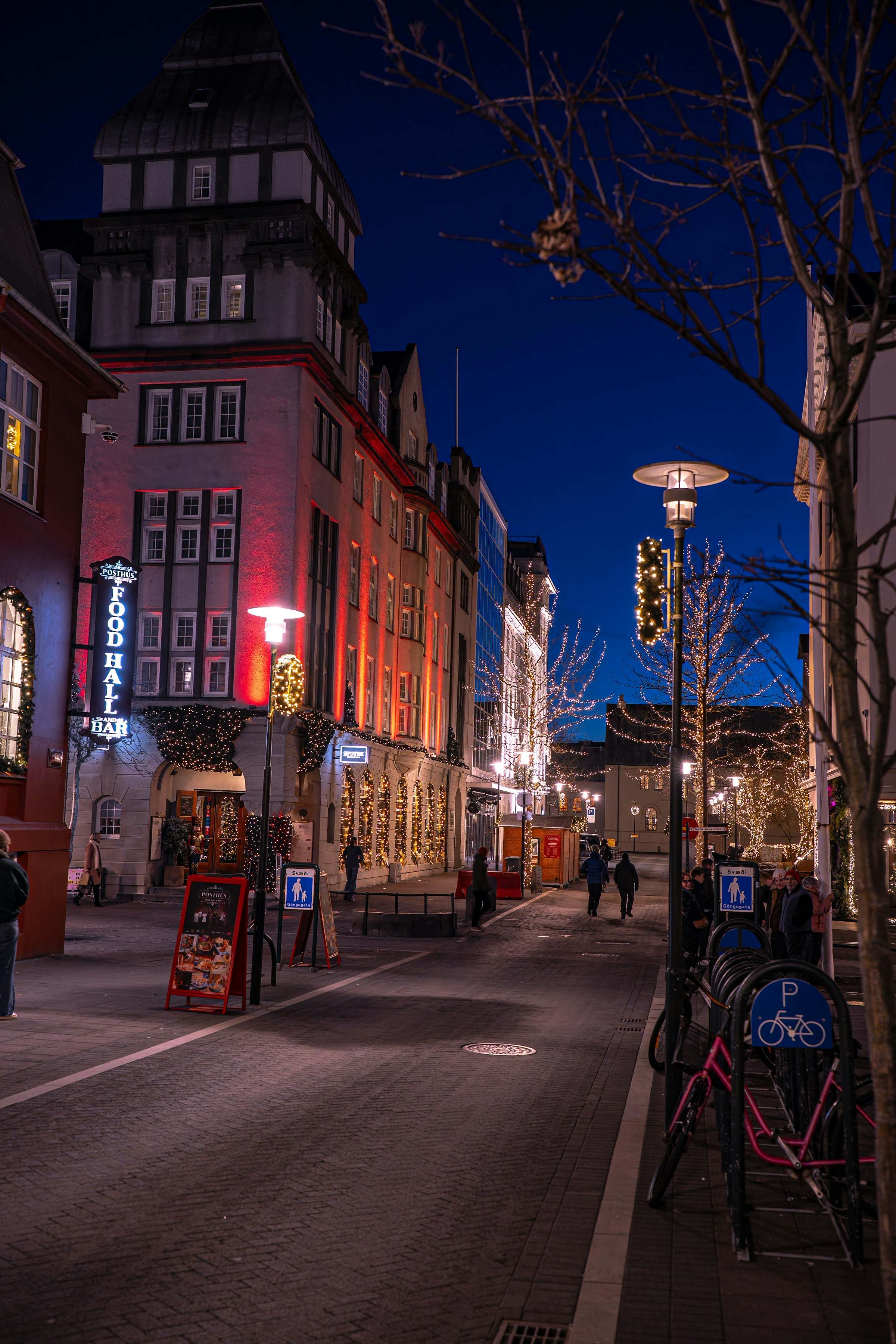
In Reykjavik the fairy lights stay in the trees all winter. Out on the south coast, where it is properly dark, the hotel rings your room when the sky starts. This is the hour we plan around.
When to go
Iceland is at its best in February and March, June and July, September and October.
Aurora season runs from September to March. The midnight sun is June and July.
- January: 3° by day, −2° at night, 87 millimetres of rain. A fair month to go.
- February: 3° by day, −2° at night, 91 millimetres of rain. One of its best months.
- March: 4° by day, −1° at night, 81 millimetres of rain. One of its best months.
- April: 7° by day, 1° at night, 59 millimetres of rain. A fair month to go.
- May: 10° by day, 4° at night, 53 millimetres of rain. A fair month to go.
- June: 13° by day, 7° at night, 43 millimetres of rain. One of its best months.
- July: 15° by day, 9° at night, 50 millimetres of rain. One of its best months.
- August: 14° by day, 9° at night, 65 millimetres of rain. A fair month to go.
- September: 11° by day, 6° at night, 87 millimetres of rain. One of its best months.
- October: 8° by day, 3° at night, 80 millimetres of rain. One of its best months.
- November: 5° by day, 0° at night, 87 millimetres of rain. A fair month to go.
- December: 3° by day, −2° at night, 95 millimetres of rain. A fair month to go.
- At its best
- Fine
- This month
- Bars run from the night-time low to the daytime high, in °C. Below them, rain in millimetres.
These are the figures for Reykjavik. The south coast, where most of this trip is spent, is wetter. Source: Icelandic Meteorological Office normals, 1991 to 2020, Reykjavík. Figures as tabulated in the climate table of the English Wikipedia article "Reykjavík", read November 2026.
Getting there
- From London
- About 3 hours, directKeflavík airport is about 50 kilometres from Reykjavik, on a dual carriageway. The south coast is one road, Route 1, driven east.
- The clocks
- The same time as LondonIt is in Iceland and in London.
Six nights in Iceland, planned around the small hours
This is a sample itinerary, to show the shape of a trip. Yours would be drawn up around your dates, your pace and what you have already seen.
From£3,900pp
Sample pricing, for two people sharing, with flights from London.
Plan a trip to IcelandDay 1
Reykjavik
A three-hour flight, a walk round the harbour, and a long soak in geothermal water. Dinner in town.
Day 2
East along the south coast
Route 1, with the waterfalls of Seljalandsfoss and Skógafoss on the way. About two and a half hours' driving, spread over a day. Tonight is the first night in the dark.
Day 3
Black sand
Reynisfjara at first light, when the sea stacks stand in the mist. A slow afternoon. After supper, the first aurora watch.
The day the trip is built around.
Day 4
The glacier lagoon
Further east to Jökulsárlón. When the boats are running, a trip among the icebergs. In winter, the shore and the black beach across the road.
Day 5
Ice, on foot
A walk on the glacier with crampons and a guide. One more night under a dark sky, and one more chance.
Day 6
The long drive back
A long day's drive back to Reykjavik, with stops. A good dinner to finish.
Day 7
Home
A morning flight, and you are in London for lunch.
Where you would stay
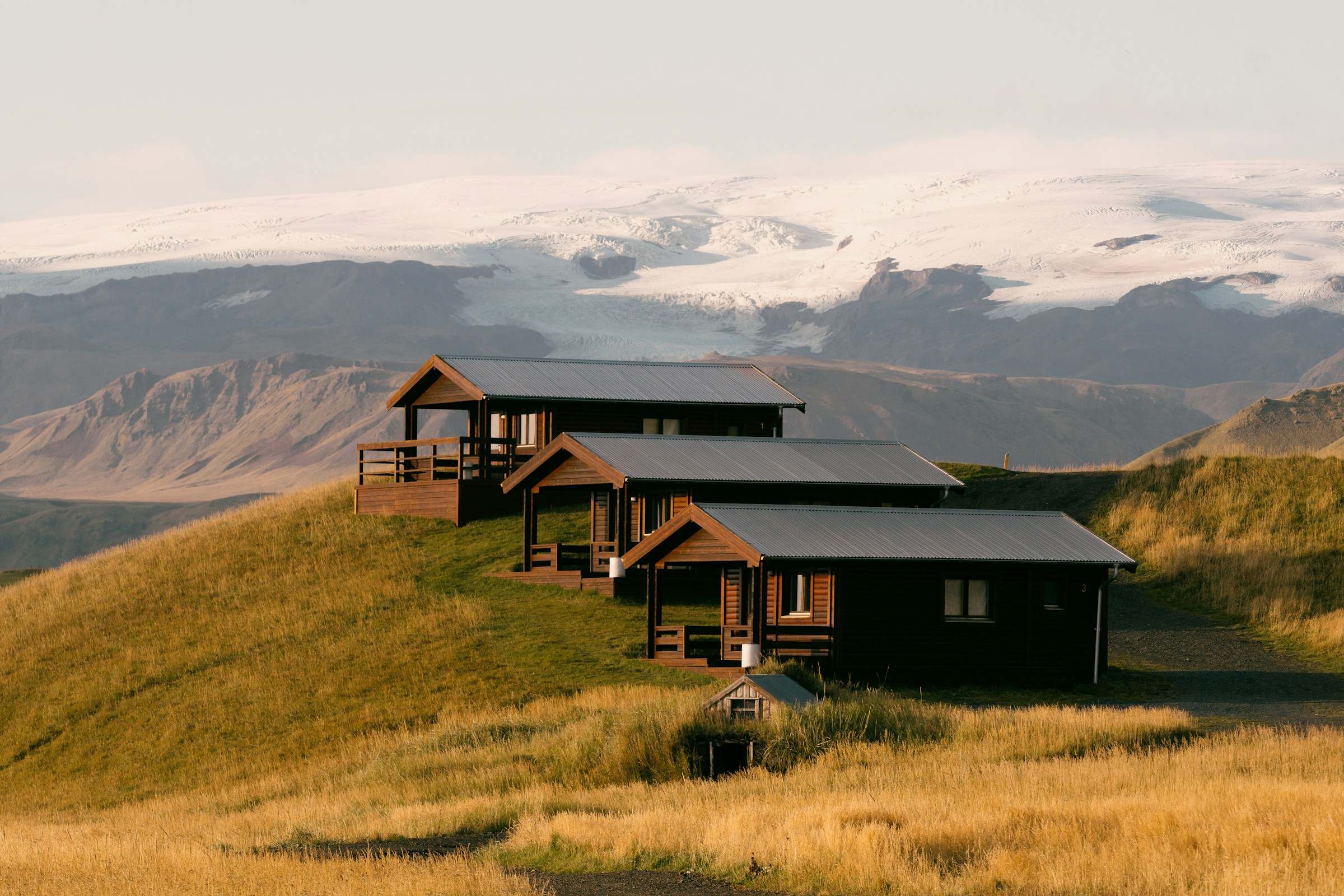
Timber cabins on a hillside
The south coast, between Vík and the ice cap
Dark timber, big windows and a hot tub outside. There is no light pollution, which is the point. They ring your room when the sky starts.
A country hotel of twenty rooms
Near Jökulsárlón, in the south-east
Low, plain and warm, with a restaurant that takes the local lamb and langoustine seriously.
A small hotel
Central Reykjavik
For the first and last nights. Everything in town is ten minutes' walk away.
We describe stays by type here. The names come with your proposal, once we know they have the room.
Fish, mostly, and very good
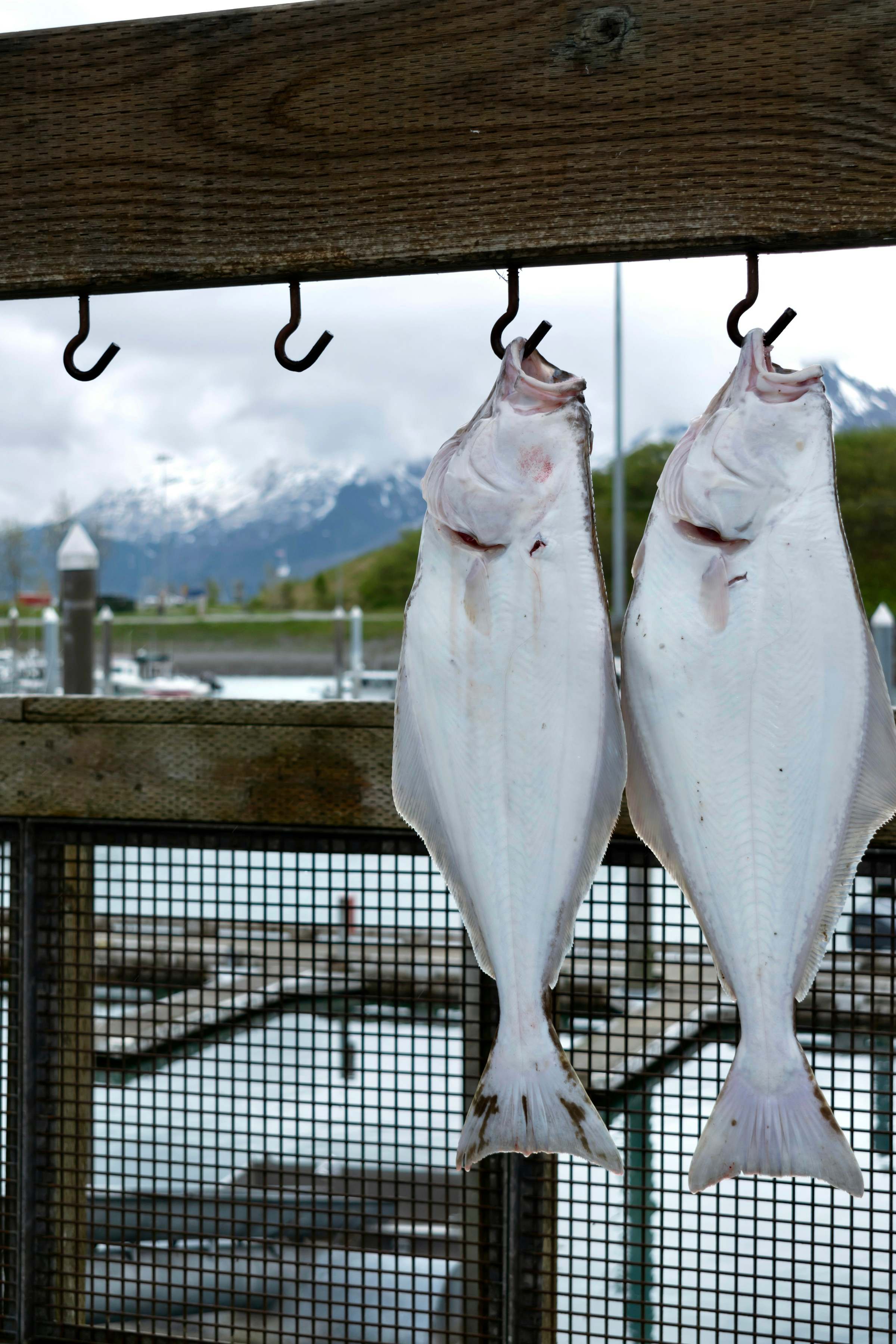
Flatfish hung to dry in the harbour wind. Langoustine from Höfn, and cod that was swimming this morning. Lamb soup when it is cold, which is often. Dark rye bread, baked slowly in hot ground, with too much butter.
Aurora, and the midnight sun. Shall we?
Tell us when you can travel and who is coming. A planner will work out where the light will be, and build the days around it.
Plan a trip to IcelandAt their best in the same months
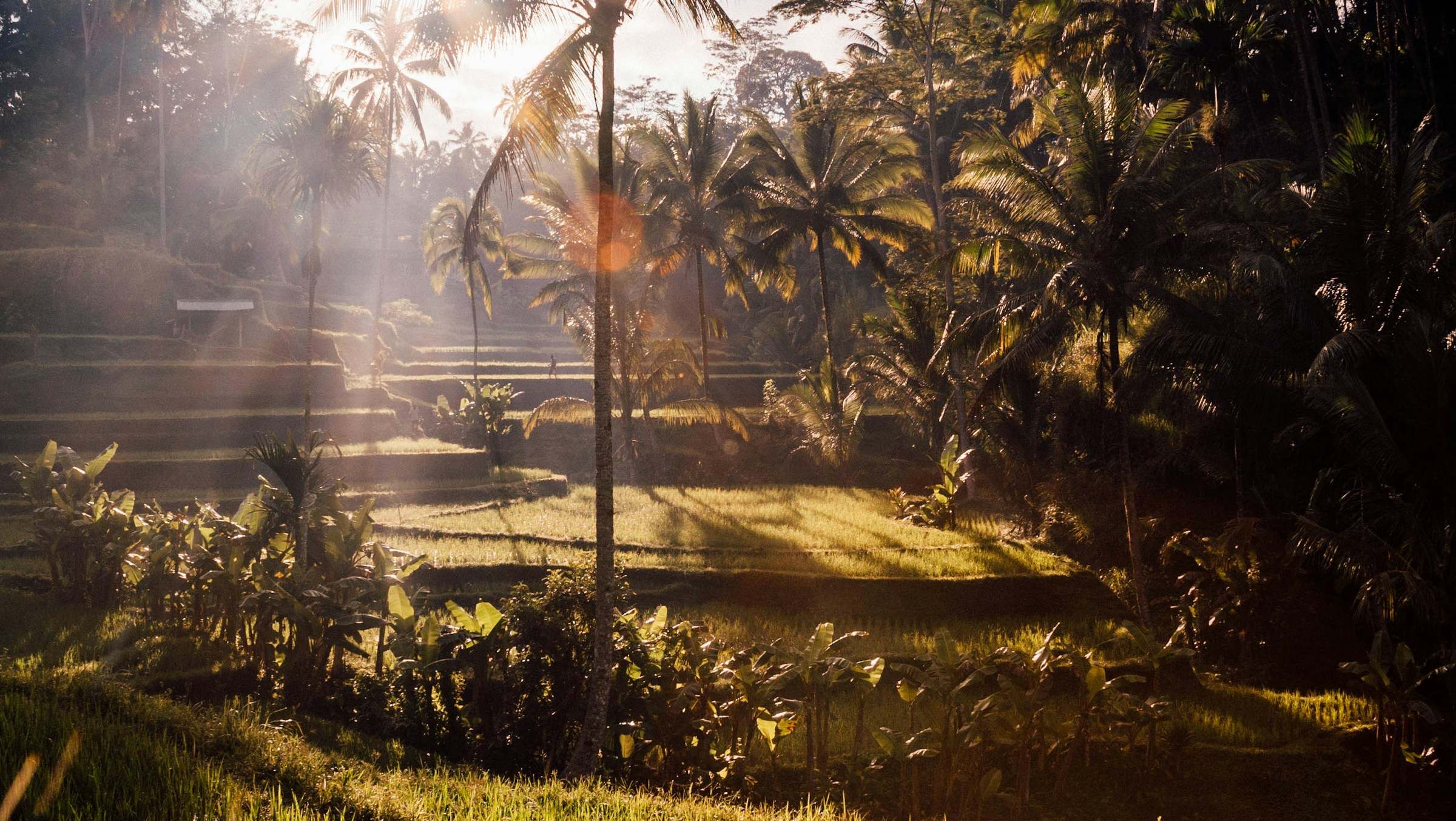
- there nowBaliDawn on the rice terraces. Also at its best in June, July and September.
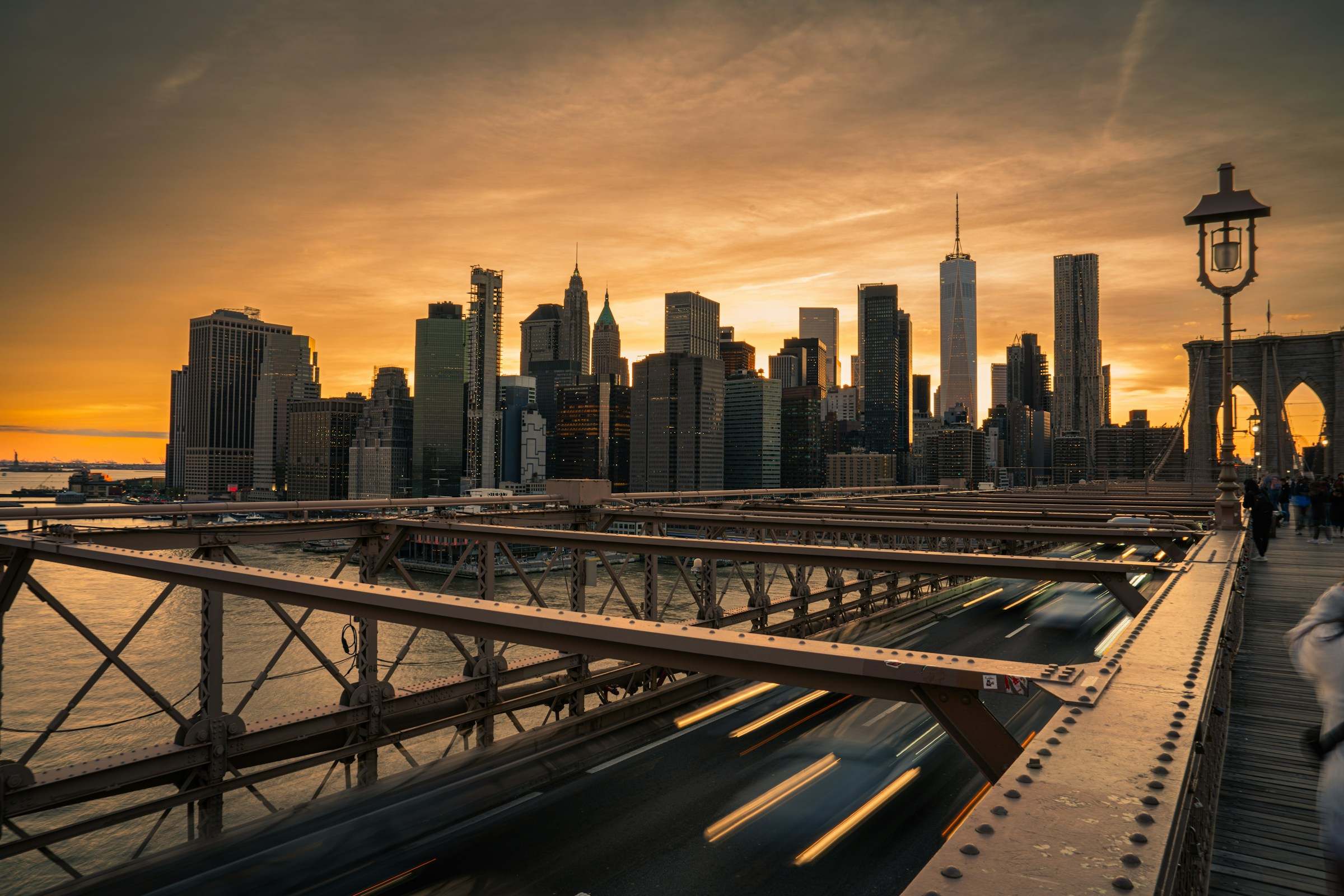
- there nowNew YorkGolden hour on the bridges. Also at its best in June, September and October.
- there nowPatagoniaFirst light on the Torres. Also at its best in February and March.